
How Electric Bike Warranties Really Work in Canada (2026 Guide)

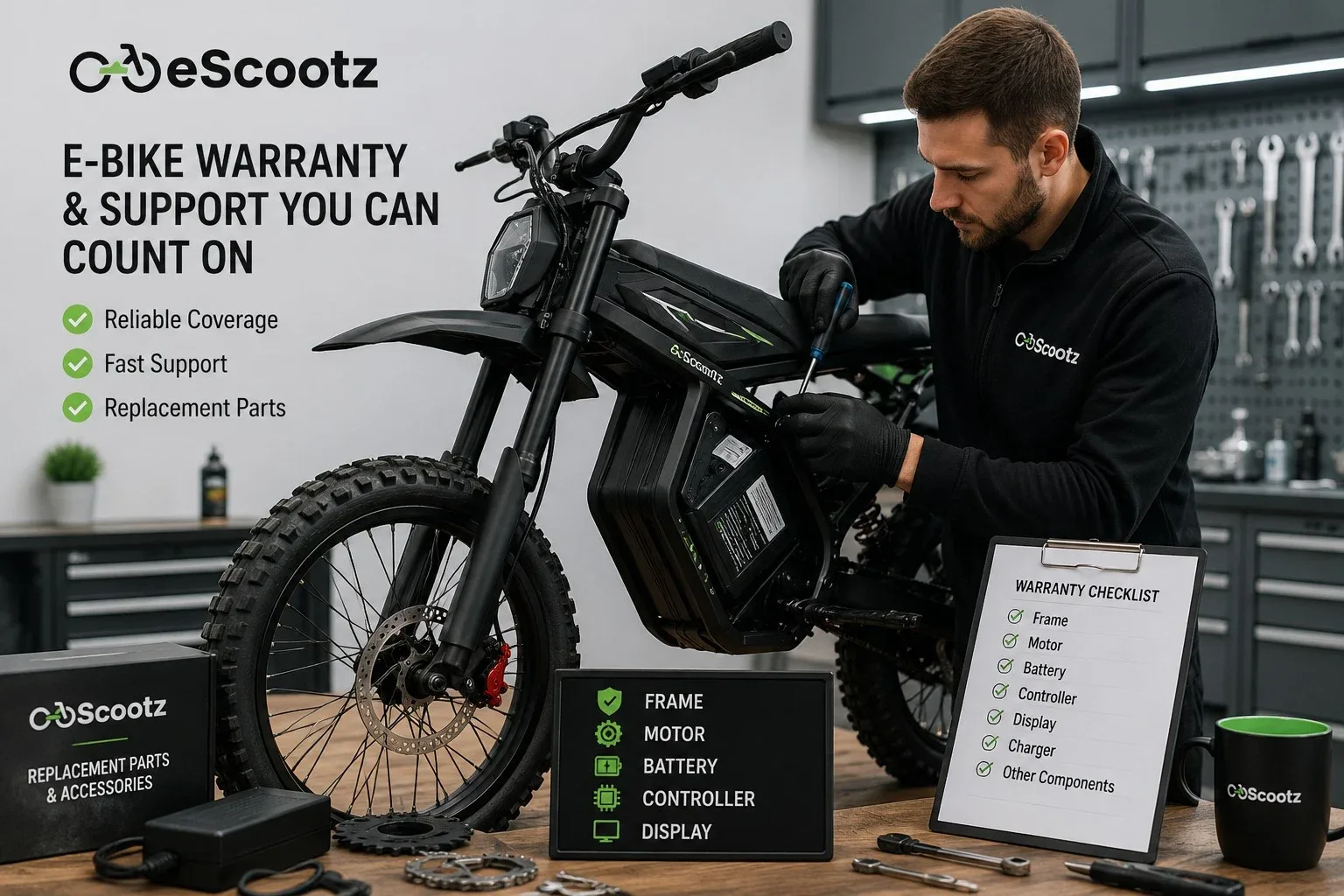
How Electric Bike Warranties Really Work in Canada (2026 Guide)
Buying an electric bike online in Canada is exciting — but for many riders, one question matters more than anything else:
What actually happens if something goes wrong?
This is one of the most common concerns Canadian customers have before buying an electric bike or electric scooter online. Unlike buying a phone or a small electronic device, electric bikes are larger, more technical products that include, batteries, controllers, displays, suspension systems and electrical components.
And the reality is simple:
Not all warranty policies are explained clearly.
Some stores advertise “full warranty” without explaining what is actually covered, how repairs work, who pays for what, how long replacement parts may take, or what happens if a local repair shop is needed.
This guide explains how electric bike warranties typically work in Canada in 2026, what riders should realistically expect, and how after-sales support is usually handled for online electric bike orders.
At eScootz Canada, we believe customers should understand the real process before buying — not after.
Understanding Electric Bike Warranties in Canada
Electric bike warranties are designed to protect customers against manufacturing defects or component failures that happen during normal use.
Most reputable electric bike retailers in Canada provide limited warranty coverage on major electrical and structural components.
However, warranty terms are not identical across all brands and models.
Some manufacturers provide stronger coverage. Others focus more heavily on battery protection. Certain components may have shorter coverage periods because they naturally wear over time.
This is why customers should always read the warranty details carefully before purchasing an electric bike.
At eScootz Canada, warranty support is handled according to the specific product and manufacturer guidelines associated with each model.
What Is Usually Covered Under Electric Bike Warranty?
Most electric bike warranties in Canada commonly cover defects related to:
Frame Defects
The frame is one of the most important structural components of an electric bike.
Warranty coverage may apply if:
- the frame develops structural cracking under normal riding conditions
- weld failures appear due to manufacturing defects
- frame alignment issues are caused by production defects
Frame damage caused by crashes, improper use, stunts, overloading, or accidents is generally not covered.
Electric
The is the core component that provides pedal assistance or throttle power.
If a stops functioning due to an internal manufacturing issue during the warranty period, replacement parts or repair solutions may be provided.
Common covered situations may include:
- internal failure
- abnormal noise caused by manufacturing defect
- loss of power unrelated to misuse
- controller communication issues linked to system defects
Water intrusion caused by misuse, unauthorized modifications, racing, or improper maintenance is generally excluded.
Battery Pack
Electric bike batteries are among the most expensive components on any e-bike.
Most reputable manufacturers provide limited battery warranty coverage against:
- manufacturing defects
- charging failures
- abnormal battery communication issues
- severe early capacity loss caused by defective cells
However, all lithium batteries naturally degrade over time.
Battery performance reduction due to normal aging is not considered a defect.
Factors that affect battery lifespan include:
- charging habits
- winter storage conditions
- extreme temperatures
- frequency of use
- long-term storage without charging
- excessive full-throttle riding
Customers should understand that battery range gradually decreases with use over time.
This is normal for all lithium-ion battery systems.
Display & Electronics
Warranty coverage may also apply to:
- display malfunctions
- controller issues
- throttle defects
- PAS sensor failures
- charging system communication issues
- wiring harness defects
Electrical troubleshooting often requires photos, videos, or diagnostic testing before replacement parts are approved.
What Is Usually NOT Covered?
This is one of the most important sections riders should understand.
Electric bike warranties are not all-inclusive protection plans.
Certain parts naturally wear out with use and are considered maintenance items.
Most electric bike warranties in Canada do not cover:
Normal Wear & Tear
This commonly includes:
- brake pads
- tires
- tubes
- chains
- grips
- cosmetic scratches
- seat wear
- pedals
- paint chips
These are standard maintenance items similar to traditional bicycles.
Damage Caused by Accidents
Warranty coverage generally does not apply if damage results from:
- crashes
- collisions
- improper jumps
- curb impacts
- stunt riding
- overloading
- towing excessive weight
Water Damage From Misuse
Many electric bikes offer water resistance — but that does not mean waterproof.
Riding during light rain is usually acceptable for most models.
However, damage caused by:
- pressure washing
- submerging components
- flooding
- deep water riding
- improper storage outdoors
may void warranty coverage.
Unauthorized Modifications
Warranty may also become void if customers:
- modify wiring systems
- install incompatible batteries
- replace controllers improperly
- increase speed limitations illegally
- install non-approved electrical parts
- use incorrect chargers
High-power aftermarket modifications can place additional stress on electrical systems and significantly increase failure risk.
How Electric Bike Repairs Usually Work in Canada
This is where many customers misunderstand how the industry operates.
Most online electric bike retailers in Canada do not operate full-service repair centers in every city.
Even many large online retailers follow a remote diagnostic model.
This means the typical warranty process often looks like this:
- Customer reports issue
- Support team requests photos/videos
- Technical diagnosis is performed
- Replacement parts are approved if necessary
- Parts are shipped to customer
- Installation is completed locally or by customer
This process is extremely common across the North American e-bike industry.
At eScootz Canada, technical troubleshooting may involve:
- video verification
- photos of components
- display error codes
- battery voltage testing
- controller diagnostics
- riding condition explanations
The clearer the information provided, the faster technical teams can usually identify the issue.
Can You Repair an Electric Bike Locally?
In many cases, yes.
Most standard bicycle shops can perform mechanical work such as:
- brake adjustments
- tire replacement
- suspension tuning
- drivetrain service
- assembly adjustments
However, not all local bike shops work on electrical diagnostics.
Some shops refuse to work on certain imported brands. Others may only service bikes they originally sold.
For this reason, many online electric bike retailers coordinate remote support combined with local repair assistance when necessary.
Depending on the situation and warranty approval, labour reimbursement may be considered for certain repairs.
Customers should always receive authorization before completing major repair work.
How Long Can Replacement Parts Take?
One of the biggest misconceptions in the e-bike industry is that every replacement part is always stocked locally in Canada.
In reality, inventory varies.
Some common parts may already be available in Canadian warehouses. Other specialized components may need to arrive from overseas manufacturer facilities or regional distribution centers.
Typical examples of locally available parts may include:
- brake systems
- tubes
- tires
- displays
- throttles
- chargers
More specialized components may occasionally require additional transit time.
This can include:
- proprietary controllers
- specific frame components
- uncommon battery systems
- custom assemblies
- unique wiring harnesses
Customers should always expect that warranty logistics may require reasonable processing and shipping time.
Transparent communication is important throughout the process.
Electric Bike Battery Warranty Reality
Battery expectations are one of the most misunderstood parts of electric bike ownership.
A lithium battery is considered a consumable component over long-term use.
Just like smartphones, laptops and electric vehicles, battery capacity gradually decreases with time and charge cycles.
Battery longevity depends heavily on:
- storage temperature
- charging habits
- riding style
- charging frequency
- weather conditions
- total mileage
To maximize battery lifespan in Canada:
- avoid storing batteries fully discharged
- avoid extreme cold exposure for long periods
- charge indoors during winter when possible
- avoid constant 100% charging for storage
- use manufacturer-approved chargers only
Proper battery care significantly improves long-term performance.
Off-Road & High-Power Electric Bikes
Certain high-power electric bikes sold in Canada are designed primarily for off-road or private property use.
These models may exceed federally recognized power-assisted bicycle limits depending on:
- output
- top speed
- throttle configuration
- local provincial regulations
Customers are responsible for checking local laws regarding:
- road legality
- registration requirements
- licensing
- helmet laws
- trail access
Improper or illegal road use may affect warranty situations if products are operated outside intended usage conditions.
Signs of a Serious Electric Bike Retailer
Before buying any electric bike online in Canada, customers should carefully evaluate the retailer.
A trustworthy retailer should provide:
- clear warranty policy
- visible contact information
- realistic shipping timelines
- transparent return conditions
- technical support availability
- clear communication regarding parts and repairs
Customers should be cautious of stores that:
- promise unrealistic delivery speeds
- provide vague warranty language
- hide return policies
- make exaggerated performance claims
- offer no visible customer support process
A transparent retailer is usually a safer long-term choice than one focused only on aggressive marketing.
Electric Bike Warranty vs Electric Scooter Warranty
Electric scooters and electric bikes operate similarly in some ways but their warranty structures may differ.
Electric scooters often experience:
- higher vibration stress
- more compact electronics
- smaller tires
- increased urban impact exposure
Because of this, maintenance intervals and wear patterns may differ compared to electric bikes.
However, the same general principles apply:
- manufacturing defects may be covered
- wear items usually are not
- misuse may void warranty
- diagnostics often require video/photo verification
Customers should always review the specific warranty terms associated with their product category.
The Reality of Buying Electric Bikes Online in Canada
The Canadian e-bike market continues growing rapidly.
Online retailers now make electric mobility more accessible than ever before.
But customers should understand that electric bikes are technical products that require:
- realistic expectations
- ongoing maintenance
- battery care
- responsible riding
- proper troubleshooting when needed
The most important factor is not whether issues can ever happen.
The important factor is whether the retailer responds professionally, communicates clearly, and helps customers resolve problems properly.
At eScootz Canada, we continue working to improve transparency, technical support and customer guidance so riders understand the real ownership experience before purchasing.
Final Though
Understanding how electric bike warranties work in Canada helps riders make better long-term purchasing decisions.
A realistic, transparent warranty process is far more valuable than vague marketing promises.
Whether you are buying your first commuter e-bike, a foldable city bike, or a high-power off-road model, knowing how support, repairs and replacement parts work can help you avoid confusion later.
The goal is not simply to buy an electric bike.
The goal is to buy from a retailer that communicates honestly and supports customers responsibly throughout ownership.


